
Renasco
European Union · Joint Research Centre

Nanoparticle collectors & functionalized glass slides

Nanoparticle screening chip collectors for OECD Test Guideline 126 licensed by the Joint Research Centre of the European Union and functionalized glass slides enhanced by cold plasma technology.

Two products.
One surface science.

From nanoparticle characterization to functionalized slides at industrial scale: one cold plasma chemistry platform, applied to different problems.

Nanoparticle screening chip collectors

A method and a device to rapidly determine the key properties of nanoparticles (NMs). Surface hydrophobicity governs cellular uptake, toxicity, immune response, hemolysis and protein adsorption — and it plays a decisive role in the development of nanoparticle-based vaccine adjuvants.

Today no single method measures both surface properties and size at once: size is determined by optical or imaging techniques, surface chemistry requires XPS or ToF-SIMS. Accurate, but slow and specialist-bound — while nanomaterials are now everywhere.

Our chip solves the problem in a single pass. The surface is divided into areas with specific properties — hydrophobicity and charge — and each hosts sub-zones with micro-holes or micro-grooves at calibrated sizes. Nanoparticles separate simultaneously by surface chemistry and by size. The properties of some areas are modified through cold plasma treatment (not dry chemistry), to capture specific nanomaterials.

Key advantages
  • One-step nanoparticle characterization

    Simultaneous evaluation of surface properties and nanoparticle size distribution in a single workflow.

  • Rapid alternative to multi-technique analysis

    Replaces the need for XPS, ToF-SIMS, optical microscopy and imaging-based size distribution methods.

  • OECD Test Guideline 126 compliant

    Supports standardized determination of nanomaterial hydrophobicity according to internationally recognized protocols.

  • JRC-licensed innovation

    Developed and validated in collaboration with the European Commission Joint Research Centre.

  • Bridges a critical analytical gap

    First approach enabling combined surface chemistry + size distribution analysis in a streamlined process.

  • High-throughput ready

    Fast screening for R&D, pharma, diagnostics, nanomedicine and Quality control materials

Renasco coated glass slides & functionalized surfaces

We provide a versatile portfolio of organic and inorganic coating chemistries for life science and diagnostic applications, enabling surface functionalization of flat glass substrates and complex three-dimensional structures.

We offer an extensive range of plasma-based surface treatment technologies, providing both standard and customized coating and surface functionalization solutions.

Our facilities are designed to support every stage of development, from early prototyping to full-scale serial production, ensuring reliable and scalable solutions for your manufacturing needs.

Key advantages
  • Surface chemistry

    Available functional groups include:

    • Epoxide
    • Amine
    • Carboxylic acid
  • Cold plasma technology
    • Dry process (no solvents)
    • Low temperature
    • Water-saving
    • Environmentally friendly
    • Reduced VOC emissions
  • Fully customizable substrates

    Designed according to your experimental protocol and research requirements.

  • Enables advanced surface science workflows

    Supports studies on adsorption, binding, biocompatibility, and nano–bio interactions.

  • Multi-application platform
    • Nanomedicine
    • Biomedical research
    • Pharmaceuticals
    • Materials science
    • Bio-interface studies
Custom configuration

We engineer the right surface for your protocol needs.

In addition to standard surface functionalization, Renasco also manufactures custom glass slides tailored to specific customer requirements.

Need a different surface chemistry? We can deliver fully customized smart substrates.

Talk to a researcher
Innovation

A platform for nanoparticle characterization.

Plasmapps Lab
Smart surface chip

Nanoparticles self-organize. Data emerges in a single step.

Micro-patterned surfaces with controlled surface energies sort nanoparticles by their physico-chemical properties. Simultaneous, high-resolution characterization — no time-consuming workflows.

Analysis
t rapida
Resolution
Δ nm
Properties / chip
N multi
Solutions

Slides, configurations & bundles .

A modular range, born in the lab and production-ready. Choose surface, configuration and volume — we engineer the rest with you.

  • Hydrophilic / super-hydrophilic

    High wettability with a low contact angle, for complete and uniform spreading of the liquid phase across the surface.

  • Hydrophobic / super-hydrophobic

    Low wettability with a contact angle up to 150° and beyond, minimizing contact between liquid and surface.

  • Antifouling

    Prevents non-specific adsorption of proteins and biomolecules on the substrate surface.

  • Cell-adhesive / Cell-repulsive

    Surfaces engineered to promote or inhibit cell adhesion on demand, from reproducible spreading to 3D spheroids and non-adherent cultures.

  • Antibacterial

    Prevents bacterial growth or induces bacterial death through immobilized active groups or species on the surface.

  • Controlled charge ±

    Calibrated surface charge density, available with positive or negative polarity.

Standard coatings

Six engineered surface chemistries.

Teflon-like coating

Ultra-thin low-surface-energy layers: water contact angle up to 110°, optical transparency preserved.

  • Hydrophobic
  • WCA up to 110°
  • Patterning via masking
Standard coating

Teflon-like coating

  • Hydrophobic
  • WCA up to 110°
  • Patterning via masking

We deposit plasma-based Teflon-like coatings on glass slides, forming ultra-thin, conformal layers that reduce surface energy and provide controlled wettability, with water contact angles up to 110°, while maintaining optical transparency and uniformity.

These surfaces reduce nonspecific adsorption and sample spreading, improving reliability in cell culture, diagnostic assays, and biosensing applications.

Using dedicated masking techniques, we can also create selective hydrophobic domains on the glass surface, enabling spatially controlled surface functionality where required.

Silica-like coating

Thin homogeneous high-surface-energy layer, strongly hydrophilic, optically transparent.

  • Hydrophilic
  • High surface energy
  • Optical transparency
Standard coating

Silica-like coating

  • Hydrophilic
  • High surface energy
  • Optical transparency

We engineer plasma-based silica-like coatings on glass slides, creating thin, homogeneous layers that enhance surface energy and deliver strong hydrophilic behavior, while preserving optical clarity and smoothness.

These coatings enable uniform liquid spreading and improved surface interaction, making them ideal for biological assays, diagnostics, and microscopy sample preparation. They are also well suited for surface functionalization, sensor development, and microarray technologies, where controlled wettability and reactivity are essential.

Silicone-like coating

Smooth, low-energy surfaces with tunable wettability — balanced between spreading and repellence.

  • Tunable wettability
  • Low energy
  • Chemically inert
Standard coating

Silicone-like coating

  • Tunable wettability
  • Low energy
  • Chemically inert

We develop silicone-like coatings via plasma technology that create smooth, low-energy surfaces with tunable wettability. These coatings provide a balanced interaction with liquids, avoiding both excessive spreading and strong repellence, while fully preserving the optical properties of the glass.

This makes them particularly useful in applications requiring controlled fluid behavior, such as biological assays, sample handling, and analytical workflows. Their stable and chemically inert nature also supports use in sensor platforms and surface modification strategies.

Selective patterning is achievable through masking, allowing the definition of functional areas with tailored surface properties directly on the slide.

Polyamine-like coating

Reactive –NH₂ groups on glass: chemically active interface with a slight positive charge.

  • Reactive –NH₂ groups
  • Slight + charge
  • Bio-immobilization
Standard coating

Polyamine-like coating

  • Reactive –NH₂ groups
  • Slight + charge
  • Bio-immobilization

Glass slides can be functionalized with amine-like surfaces generated by plasma processes, introducing reactive –NH₂ groups directly onto the glass. This modification transforms an inert substrate into a chemically active interface, also providing a slight positive surface charge under appropriate conditions.

Such surfaces are particularly suited for applications requiring strong and stable biomolecule attachment, including DNA and protein immobilization, biochips, and diagnostic platforms. The presence of amine groups further enables subsequent chemical coupling reactions and tailored surface functionalization.

Selective masking allows the creation of well-defined reactive regions, enabling precise spatial control of functional areas across the glass slide.

Polycarboxylic acid-like coating

Hydrophilic, active –COOH groups with a slight negative charge for electrostatic binding and coupling.

  • –COOH groups
  • Slight − charge
  • Chemical coupling
Standard coating

Polycarboxylic acid-like coating

  • –COOH groups
  • Slight − charge
  • Chemical coupling

Glass microscope slides can be modified with plasma-generated polycarboxylic acid–like coatings, introducing carboxyl (–COOH) functionalities onto the surface. This treatment yields a hydrophilic and chemically active interface, typically exhibiting a slight negative surface charge under relevant conditions.

Such surfaces are well suited for applications involving electrostatic interactions and biomolecule binding, including protein adsorption control, diagnostic platforms, and bioanalytical assays. The presence of carboxyl groups also enables further chemical coupling, supporting advanced surface functionalization strategies.

Patterned functionalization can be achieved via masking, allowing the creation of spatially defined regions with tailored surface chemistry on the substrate.

PEO-like coating

Ultra-thin, strongly hydrophilic, anti-fouling layer for biosensing and lab-on-a-chip.

  • Anti-fouling
  • Stable hydrophilic
  • Lab-on-a-chip
Standard coating

PEO-like coating

  • Anti-fouling
  • Stable hydrophilic
  • Lab-on-a-chip

Using plasma deposition, PEO-like (polyethylene oxide–like) coatings can be applied to glass microscope slides, forming ultra-thin, highly uniform layers that are chemically inert and strongly hydrophilic. These surfaces are specifically designed to suppress nonspecific adsorption of proteins and biomolecules, providing excellent anti-fouling performance. For this reason, they are widely used in biosensing platforms, diagnostic assays, and lab-on-a-chip systems, where minimizing background interaction is critical for accuracy and signal reliability.

The coating also ensures stable wetting behavior and compatibility with aqueous environments, making it suitable for advanced biomedical and analytical applications. Through masking approaches, it is possible to define non-fouling regions selectively on the glass surface, enabling spatial control of biological interactions.

A format for every research scale.

From early prototyping to packs for experimental triplicates, up to dedicated volumes for R&D and industry: choose the format aligned with your protocol.

Prototyping
slide

Single unit

For initial evaluations, compatibility tests and protocol tuning.

Routine
slides

Lab pack

The go-to format for experimental triplicates and method validation.

Intensive
15× slides

Advanced research

Volume dedicated to extensive studies and continuous R&D use.

R&D / Industry

Custom solutions

Dedicated volumes and configurations for research centers and industrial clients.

Applications

Where surface chemistry makes the difference.

Six domains where the surface isn't a backdrop but a design parameter. For each, a calibrated chemistry: the same slide can be antifouling for diagnostics or cell-adhesive for cell biology — the protocol decides, not the catalog.

  1. Diagnostic laboratory instrumentation

    Diagnostics & Nanomedicine

    High-sensitivity diagnostic assays, protein microarrays and nanoscale delivery systems: antifouling surfaces and calibrated charge for precise, reproducible signals.

    • Antifouling
    • Controlled charge ±
    • Hydrophilic
  2. Cell culture microscopy

    Cell biology & advanced research

    Precise modulation of cell adhesion for 2D and 3D models — spheroids, organoids, primary cultures. The surface becomes a built-in part of the experimental protocol.

    • Cell-adhesive
    • Cell-repulsive
    • Hydrophilic
  3. Pharmaceutical research

    Pharmaceuticals

    Controlled substrates for drug discovery, high-throughput screening and molecular interaction studies. Batch-to-batch reproducibility built into the process, not bolted on afterwards.

    • Antifouling
    • Hydrophilic
    • Customization
  4. Cosmetic formulations

    Cosmetics

    Surface models to test topical formulations, evaluate permeation and simulate interaction with complex biological substrates.

    • Hydrophobic
    • Controlled charge ±
    • Hydrophilic
  5. Industrial production line

    Industrial

    Surface functionalization for quality control, sensing and manufacturing processes: lab-grade precision, at production scale.

    • Hydrophobic
    • Antifouling
    • Customization
  6. Natural environment

    Environmental science

    Substrates and sensors for environmental testing: detection of contaminants, microplastics and environmental biomarkers with tunable chemical specificity.

    • Controlled charge ±
    • Hydrophilic
    • Antifouling

Don't see your field? Most of our projects start from a specific protocol — the right surface chemistry comes from the conversation, not the price list.

Talk to a researcher
The ecosystem

A division of
Plasmapps

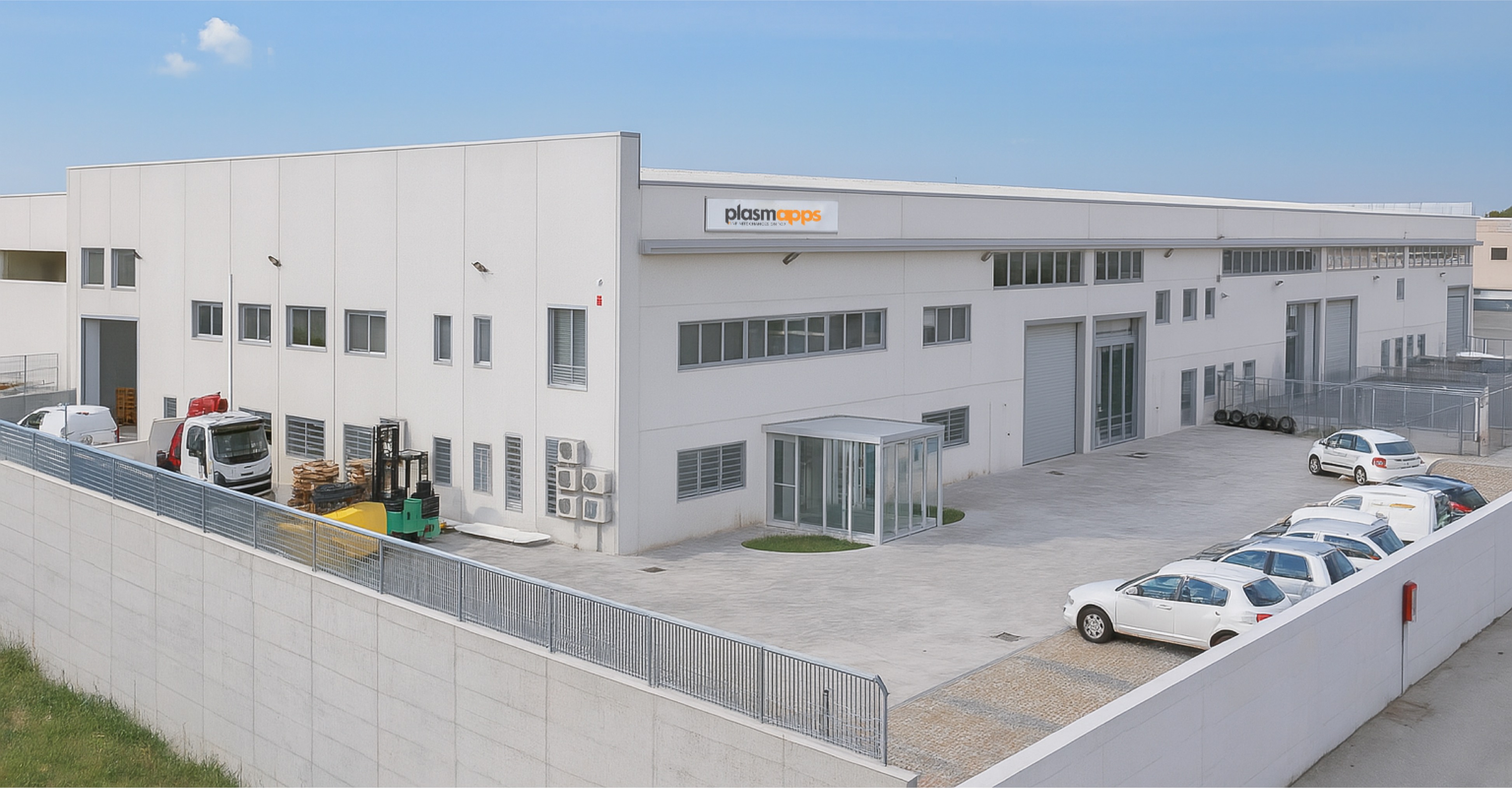
Renasco was founded within the Plasmapps ecosystem, a company specialized in the research and development of innovative plasma-chemical processes for the surface treatment of materials.

We work with public bodies and private companies across the chemical, pharma, manufacturing and environmental sectors as a strategic R&D partner.

Plasmapps facility — research and production headquarters.
Contact

Let's talk about your project.

Tell us about your substrate, biological matrix and experimental goal. Our research team replies with a detailed technical proposal: project specs, characterization protocols and realistic delivery timing. Every collaboration starts as a conversation between scientists — not a quote.

ricerca@renasco.com
Application area
Sending…